Technology That Cares: How Mobile Devices Are Helping Reduce Clinical Burnout and Transform Healthcare
After more than 30 years in healthcare, ACS MediHealth understands that meaningful transformation isn't just about introducing new technology. It's about making life easier for clinicians, improving the patient experience, and giving healthcare professionals more time to do what they do best — care for people.

Healthcare Has Changed. The Challenges Are Real.
Walk through almost any hospital today, whether in the United States, the United Kingdom, Ireland, or elsewhere around the world, and you'll see something remarkable: dedicated healthcare professionals working tirelessly to provide the best possible care.
But you'll also see something concerning.
Nurses spending countless hours documenting patient information. Physicians moving between patients and computer workstations. Clinical teams navigating multiple systems, searching for information, and trying to keep up with growing administrative demands.
The reality is simple: our healthcare professionals entered this industry to care for patients, not to spend their days managing technology.
Clinical burnout is a serious challenge facing healthcare organizations worldwide. Staffing shortages, increasing patient volumes, complex documentation requirements, and the pressure to do more with less are taking their toll.
And while technology has helped healthcare advance in extraordinary ways, it has sometimes introduced additional complexity instead of removing it.
At ACS MediHealth, we believe it's time to change that.
Bringing Technology to the Point of Care
Imagine a nurse walking into a patient's room with everything they need right in the palm of their hand.
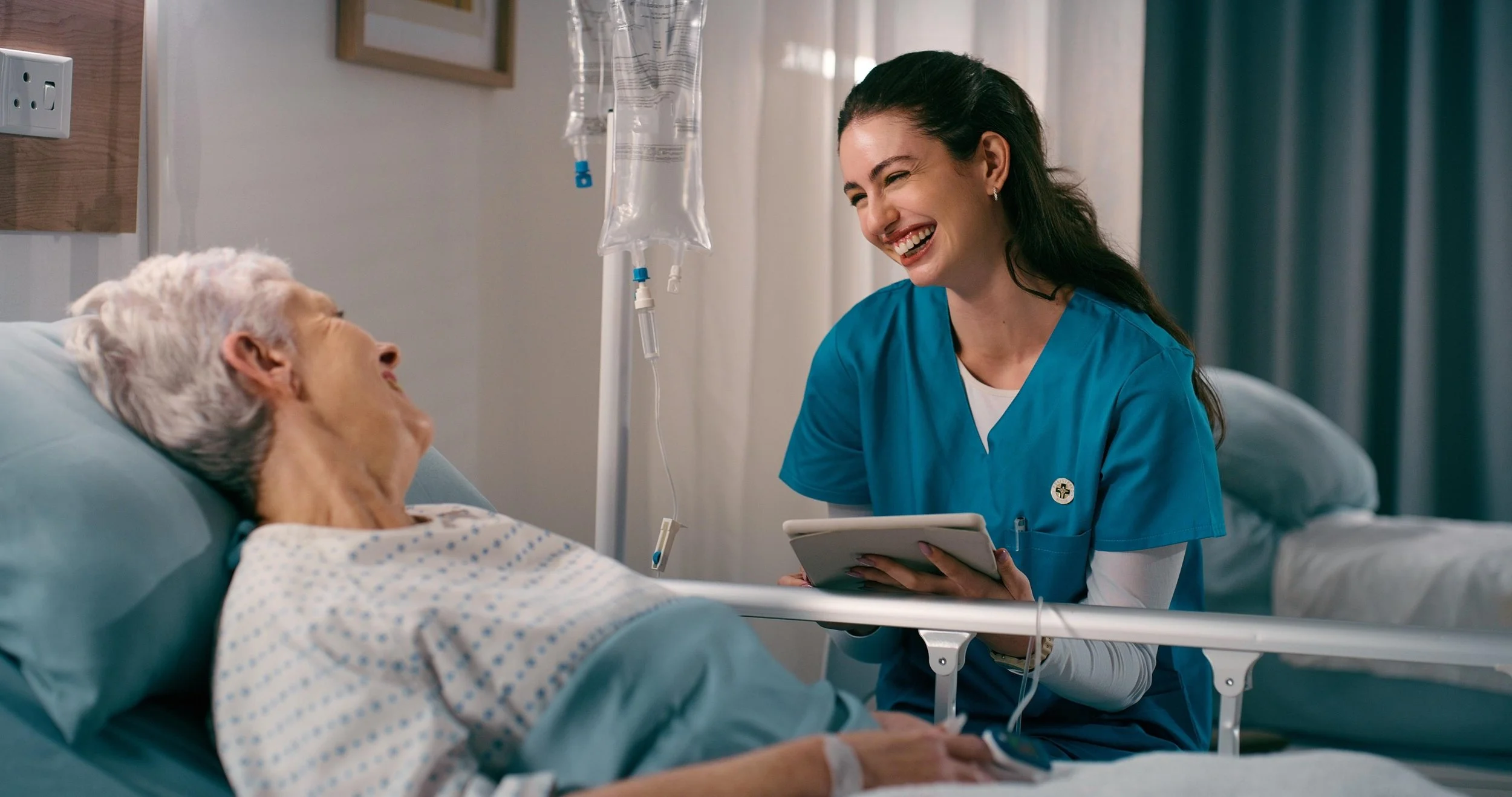
Instead of returning to a workstation to review medications, update patient records, or document care, they can access the information they need directly at the bedside.
That's the power of mobile technology in healthcare.

Today's healthcare-grade mobile devices, including handheld computers, tablets, barcode scanners, and smartphones, can help clinicians perform essential tasks more efficiently.
When properly integrated with clinical applications and electronic health records (EHRs), mobile devices can support:
• Real-time documentation: Record patient information at the point of care instead of relying on notes entered later.
• Medication administration: Scan patient wristbands and medications to support safer verification workflows.
• Immediate access to patient information: Review clinical information without repeatedly returning to a workstation.
• Better communication: Help care teams communicate and coordinate more effectively.
• Reduced administrative burden: Simplify repetitive tasks and reduce unnecessary steps in clinical workflows.
These improvements may sound small individually, but across hundreds of clinicians and thousands of patient interactions, their potential impact is significant.
Reducing Documentation Errors Through Smarter Workflows
Let's consider a common situation.
A nurse completes an assessment, moves on to another patient, responds to an urgent request, and eventually returns to a workstation to document the earlier encounter.
By that point, valuable time has passed, and important details may be harder to recall.
Now imagine that same nurse documenting the assessment immediately, while still with the patient.
The information is captured closer to the moment care is delivered, reducing reliance on memory and delayed transcription.
Mobile technology can also enable barcode-based verification, structured data entry, and immediate access to relevant patient records.
The goal isn't simply faster documentation. It's more accurate, timely, and meaningful documentation.
Of course, mobile devices alone cannot eliminate errors. Successful implementation requires thoughtfully designed workflows, reliable connectivity, appropriate clinical software, staff training, and ongoing support.
That's where experience matters.
Addressing Clinical Burnout: Giving Time Back to Caregivers
One of the most important questions healthcare leaders should ask when evaluating technology is:
Will this make life easier for the people providing care?
Too often, technology decisions focus primarily on technical specifications, features, and infrastructure.
Those things are important, but they don't tell the whole story.
The real measure of success is what happens during a clinician's shift.
Does the technology eliminate unnecessary steps? Does it reduce repeated data entry? Does it make information easier to access? Does it allow clinicians to spend more time with their patients?
When mobile technology is implemented thoughtfully, it can help reduce workflow friction and documentation burden — two contributors to clinician frustration.
Mobile solutions aren't a cure for burnout. Staffing, workplace culture, leadership, and organizational support remain essential. But removing avoidable technology-related frustrations is an important part of creating a better clinical environment.
Every minute we can responsibly give back to a clinician is a minute that can be spent where it matters most: with a patient.
Over 30 Years in Healthcare. Experience That Makes a Difference.
At ACS MediHealth, healthcare isn't a new market we've decided to enter.
It's been our focus for more than three decades.
Throughout that time, we've witnessed the evolution of healthcare technology firsthand — from traditional hospital systems and early electronic documentation to today's increasingly connected, mobile, and digitally enabled healthcare environments.
We've seen what works, what doesn't, and, perhaps most importantly, what happens when technology is implemented without fully understanding the needs of the people who use it.
That experience has helped position ACS MediHealth as a trusted industry expert, supporting healthcare customers across the globe.
Through ACS MediHealth and ACS MediHealth Ireland, we bring together decades of healthcare knowledge, technology expertise, and an understanding of the operational challenges facing hospitals and health systems.
Our approach is built around listening first.
We want to understand how clinicians work, where inefficiencies exist, and what improvements will make a meaningful difference.
Whether an organization is exploring mobile computing, device deployment, clinical workflow optimization, or broader healthcare transformation initiatives, our focus remains the same:
Deliver practical technology solutions that support caregivers, strengthen healthcare operations, and improve the patient journey.
The Future of Healthcare Is Connected, Mobile, and Human
As artificial intelligence, automation, mobile computing, and connected healthcare technologies continue to evolve, the opportunities are tremendous.
But innovation shouldn't be measured by how many new technologies a hospital adopts.
It should be measured by the difference those technologies make.
A nurse who spends less time navigating systems. A physician who has better access to timely information. A clinical team that communicates more effectively. A patient who feels that their caregiver is present, engaged, and focused.
That's what meaningful healthcare transformation looks like.
And it's why we believe mobile technology will continue to play an important role in the future of care delivery.
Our Commitment: Transforming Healthcare. Improving Lives.
At ACS MediHealth, we're proud of our more than 30-year journey in healthcare, the relationships we've built, and the customers and partners who trust us to help navigate an ever-changing technology landscape.
From North America to the United Kingdom, Ireland, and beyond, we remain committed to helping healthcare organizations make smarter technology decisions that put people first.
Because at the end of the day, healthcare transformation isn't about devices, software, or systems.
It's about people.
It's about the nurse who finally has a little more time with a patient.
It's about the physician who can focus on delivering care instead of searching for information.
It's about helping healthcare organizations create environments where technology works for their teams, not the other way around.
And most importantly, it's about improving the experience of every patient who places their trust in our healthcare systems.
After more than three decades, one thing remains clear to us:
The best healthcare technology doesn't get in the way of care. It makes better care possible.
ACS MediHealth | ACS MediHealth Ireland
Over 30 years of healthcare technology expertise. Supporting healthcare organizations globally.
Better Care for Patients. Stronger Performance for Providers. Smarter Solutions. Sustainable Results.